
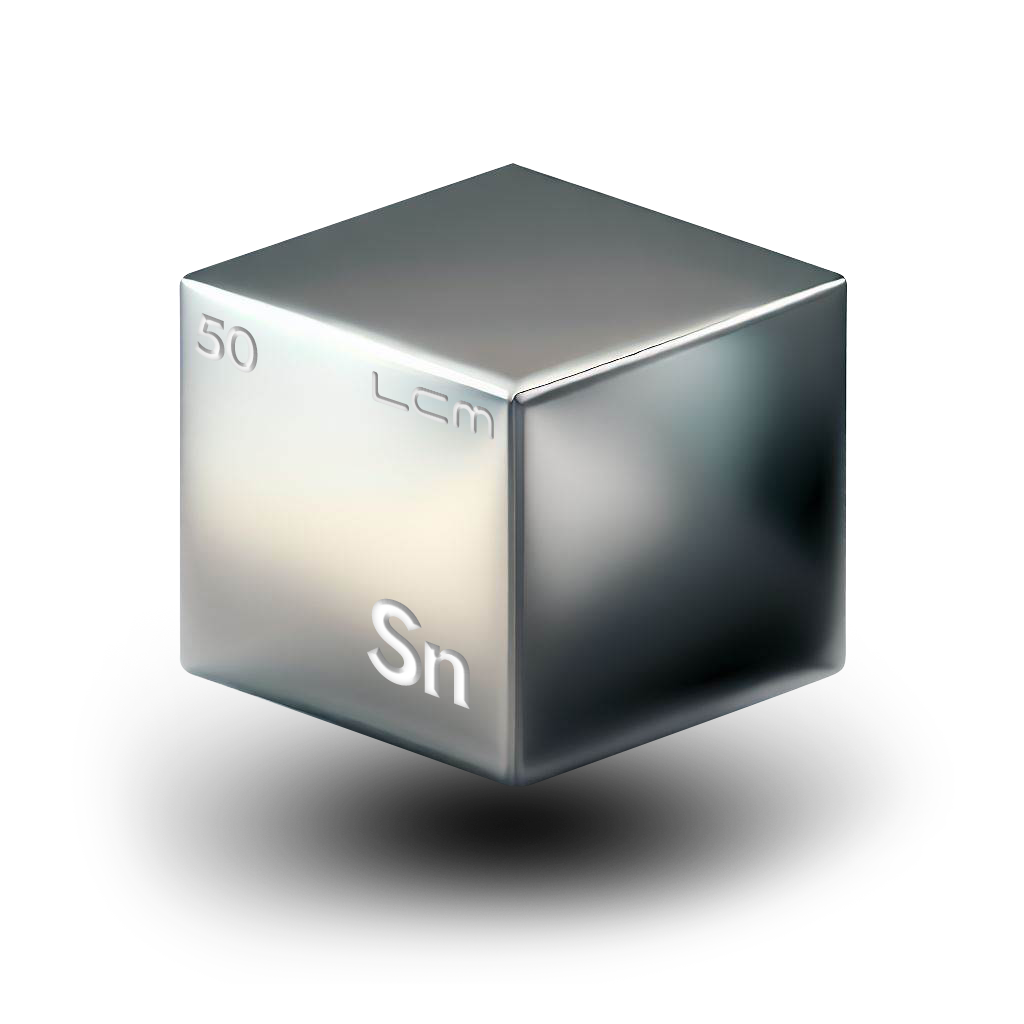
Our Tin is available as the following alloys:
SnCo: SnCo refers to an alloy composed of tin (Sn) and cobalt (Co). The specific composition ratio may vary depending on the desired properties and applications. SnCo alloys can exhibit a range of characteristics such as high corrosion resistance, good mechanical strength, and excellent magnetism. They are commonly used in various industries, including electronics, automotive, and aerospace, for applications such as soldering, magnetic materials, and corrosion-resistant coatings.
SnCuGeAg: SnCuGeAg represents an alloy consisting of tin (Sn), copper (Cu), germanium (Ge), and silver (Ag). The specific composition ratio can vary based on the desired properties and applications. SnCuGeAg alloys can exhibit a combination of excellent electrical conductivity, high-temperature stability, and good solderability. These alloys are commonly used in electronics and electrical industries for applications such as lead-free soldering, circuit boards, and electrical connectors.
SnCuTiZr: SnCuTiZr is an alloy that combines tin (Sn), copper (Cu), titanium (Ti), and zirconium (Zr). The specific composition ratio may vary depending on the desired properties and applications. SnCuTiZr alloys can exhibit improved mechanical properties, high-temperature stability, and enhanced corrosion resistance. These alloys are commonly used in industries such as aerospace, automotive, and electronics for applications including soldering, brazing, and structural components.
SnFe: SnFe refers to an alloy composed of tin (Sn) and iron (Fe). The specific composition ratio may vary depending on the desired properties and applications. SnFe alloys can exhibit characteristics such as improved mechanical strength, corrosion resistance, and good formability. They are commonly used in industries such as automotive, construction, and electronics for applications like coating materials, soldering, and components that require both strength and corrosion resistance.
SnNbTiFe: SnNbTiFe represents an alloy composed of tin (Sn), niobium (Nb), titanium (Ti), and iron (Fe). The specific composition ratio can vary based on the desired properties and applications. SnNbTiFe alloys can exhibit a combination of characteristics such as high strength, good ductility, and excellent thermal stability. These alloys are commonly used in various industries, including aerospace, automotive, and electronics, for applications such as structural components, electrical connectors, and high-temperature environments.